
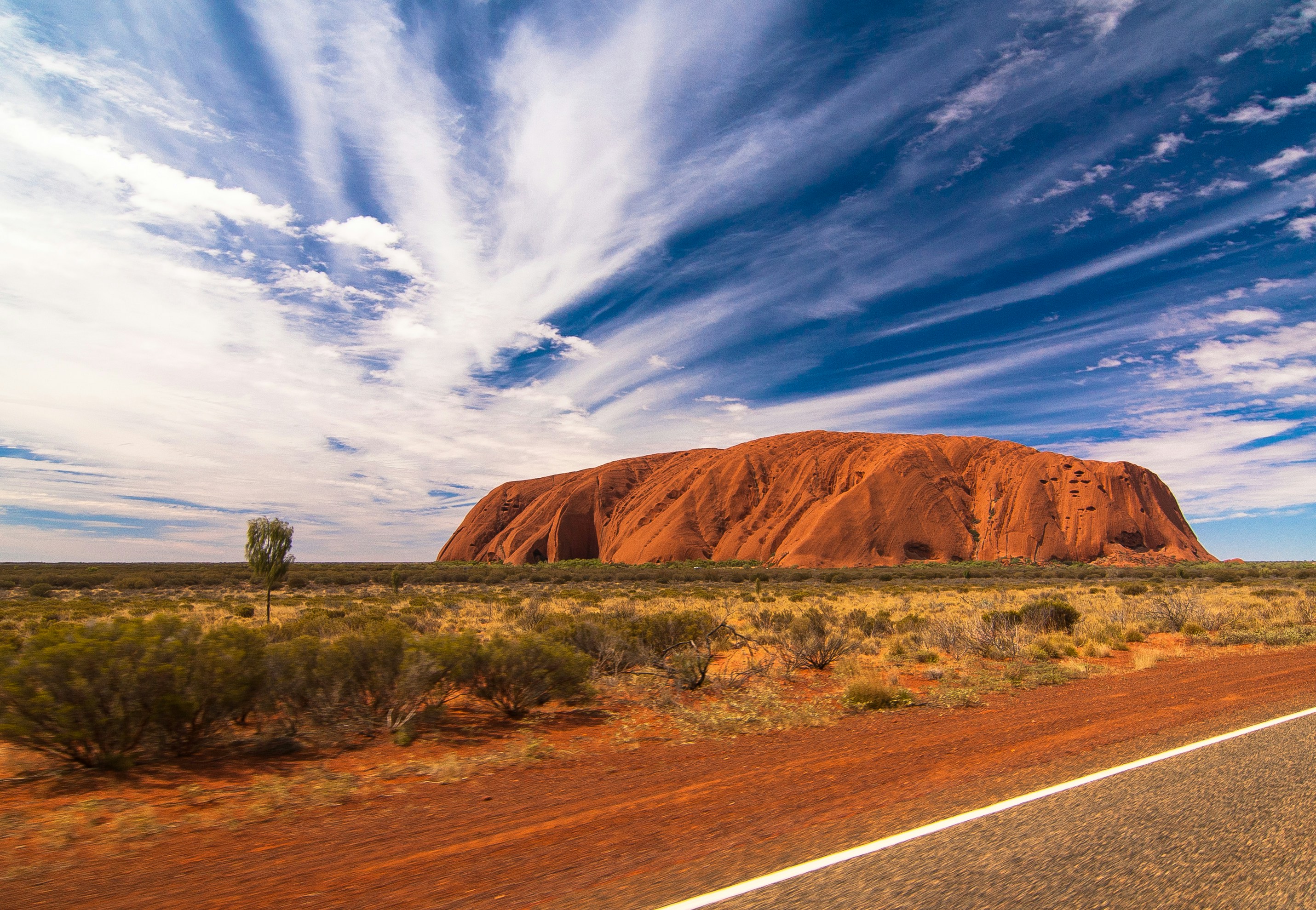
Uluru tours, hour by hour
We keep the Red Centre the way the desert actually hands it over — by light. Choose the hour first, and the walk, the drive and the viewpoint follow.
THE INDEX
Everything at Uluṟu, filed by light
Most travellers arrive asking which tour to take. The more useful question in the Red Centre is which hour you want to be standing outside, because the same sandstone reads completely differently at six in the morning and four in the afternoon.
Every page below is written around that. Start anywhere in the list.
The full circuit around the base, plus the shorter sections most people walk when the day heats up.
What the colour actually does at either end of the day, and how the two viewing areas differ.
Thirty-six domes an hour west of Uluṟu, walked in the cool part of the day.
Rim country, sheer walls and shaded pockets of older vegetation on the way north.
The long drive south, in both directions, and where multi-day routes usually break the distance.
Why the darkness out here is worth staying up for, and what the cold does after sundown.
The day's ledger
Conditions, not timetables. Daylight, heat and colour shift through the year, so treat these as what the desert tends to do — then plan your day around it.
first light
Cold air, long shadow
Before the sun clears the horizon the sandplain sits lilac-grey and the air can be genuinely cold, even after a hot day. Colour arrives on the rock face fast, then flattens within the hour.
mid-morning
Walking weather closes
Ground temperature climbs quickly and flies find you. This is when longer base and gorge walks are usually finished rather than started. Carry more water than feels reasonable.
hard midday
Shadowless and bright
The rock loses its modelling and photographs poorly. Shade under bloodwoods and desert oaks is thin. Most travellers spend these hours indoors, resting or moving between places by road.
golden hour
Colour returns from the west
Low sun rakes across the gullies and the domes of Kata Tjuṯa separate into distinct shapes. Wind often eases at the same time.
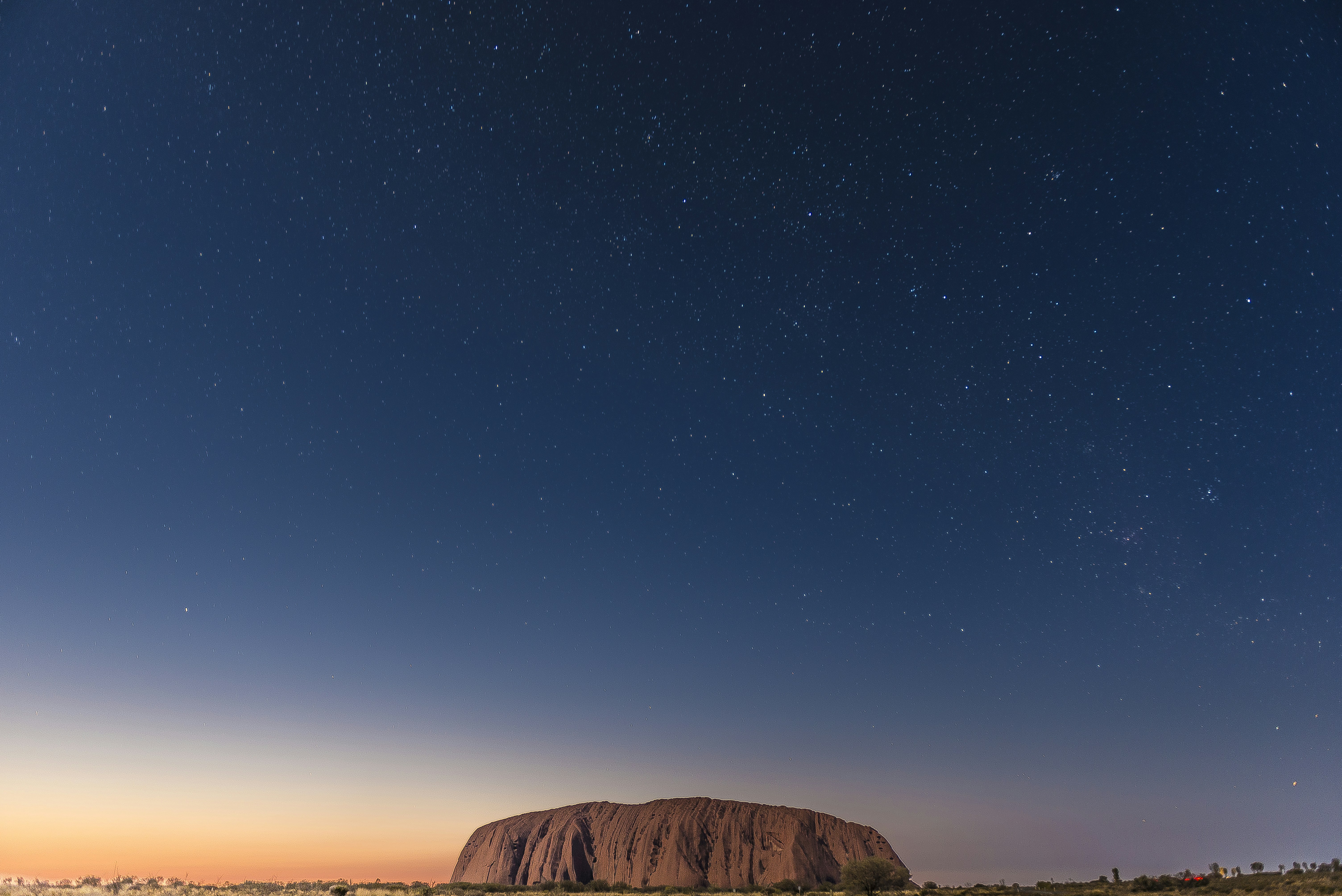
dusk
Silhouette, then a fast drop
Desert oaks go black against a turquoise-to-apricot sky and the temperature falls quickly once the light goes. A jumper you carried all day suddenly earns its place in the pack.
night
Dark the way dark used to be
Almost no light spill for hundreds of kilometres. The Milky Way reads as structure rather than haze, and the difference between moonless and full-moon nights is dramatic — worth checking before you set your dates.
Nights are the easiest part of a Red Centre trip to under-plan. Build in one where you have nowhere to be afterwards.
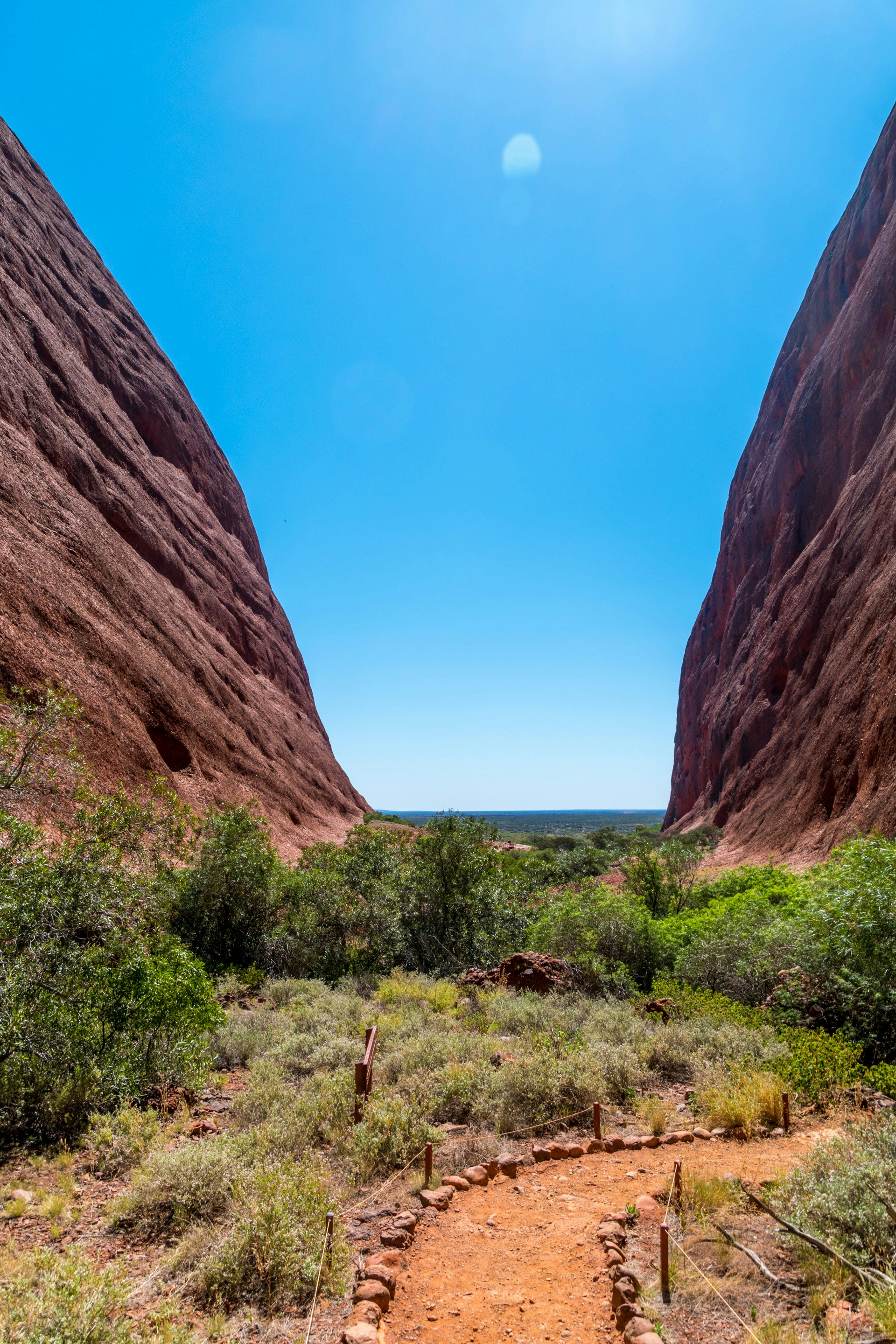
Uluṟu and Kata Tjuṯa on foot
The two are often booked as one day and shouldn’t be. Uluṟu is a single mass you circle on the tracks around its base; at Kata Tjuṯa the walking goes into the rock — narrow gorges between sheer walls, like the pass pictured, where shade holds longer and wind funnels through.
The climb at Uluṟu is closed, at the request of Aṉangu Traditional Owners, and some areas are signed as sacred sites where photography is restricted. Both are respected on every walk we plan.
MULTI-DAY
Red Centre routes, shortest to longest
Distances out here are the real constraint. Each route below adds a night, and each added night buys back an hour of good light instead of a stretch of highway.
route one
Uluṟu base
Stay near the rock, walk the base early and take both ends of the day at the viewing areas. The least driving, the most repeat looks at one place.
route two
Uluṟu and Kata Tjuṯa
Adds the domes and a gorge walk in cooler light, with the middle of the day used for the drive between the two rather than for walking.
route three
Uluṟu, Kings Canyon, Alice Springs
The long loop, run in either direction. Watarrka breaks the distance north, and Alice Springs closes it out with ranges, gaps and a different kind of desert country.
Places we write about
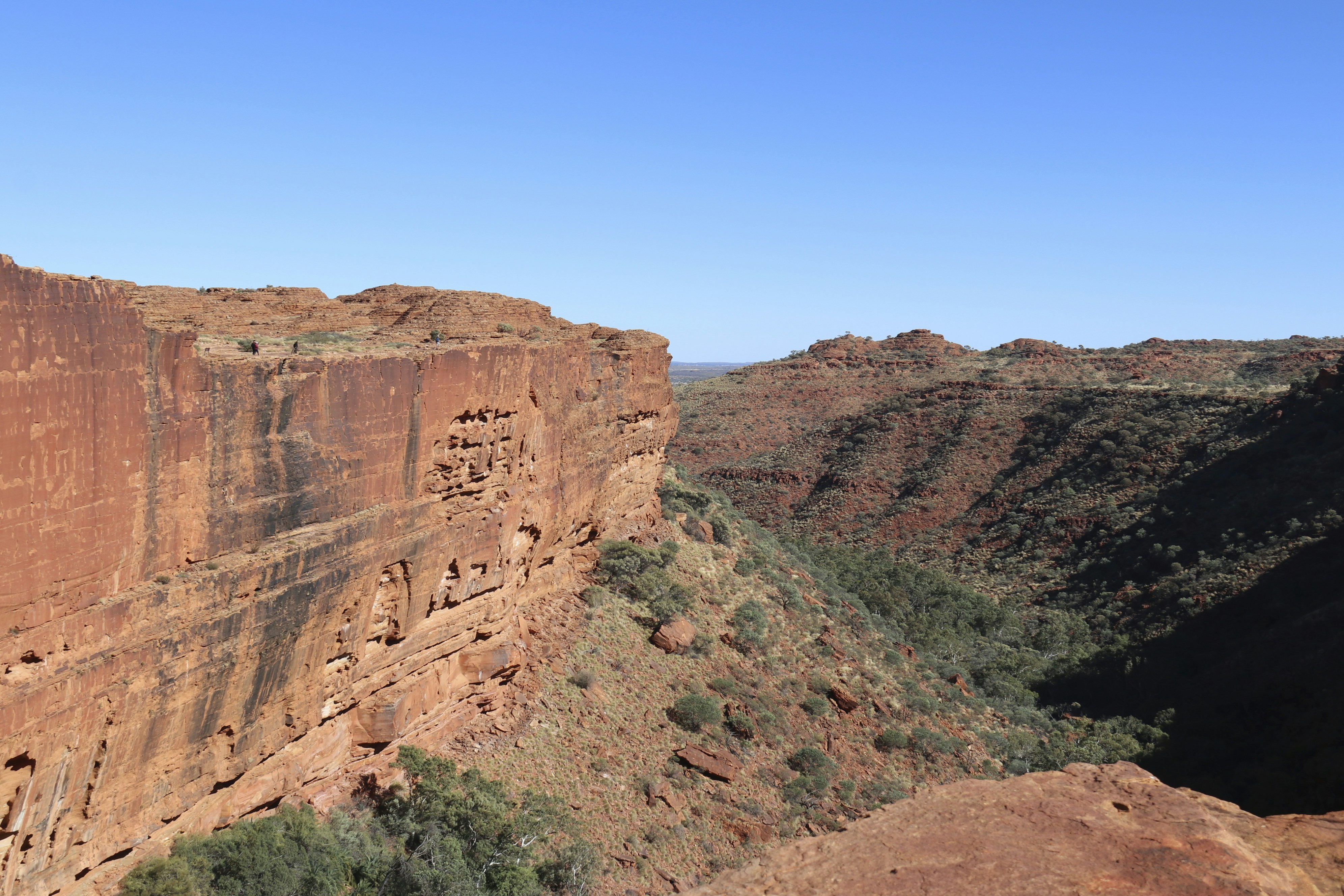
Four places carry most Red Centre trips. Kings Canyon, in Watarrka National Park, is rim-and-gorge country — sheer walls, loose scree at the edges and pockets of vegetation that hold on where water does.
Before you go
Practical desert travel information, kept general on purpose. Conditions change with the season and the day, so check current park and road advice before you set out.
Heat and water
Summer heat in the Red Centre is serious, and longer walks are commonly closed on hot forecasts. Carry water on every walk, refill wherever you can, and treat shade as a resource rather than a luxury.
Seasons and what they change
Cooler months bring mild days and cold pre-dawn starts. Warmer months bring long light, higher temperatures and more restrictions on walking. Sunrise and sunset move considerably across the year, which changes how much of a day you can actually use.
Distances and driving
Uluṟu, Kata Tjuṯa, Kings Canyon and Alice Springs are hours apart on sealed highway with long gaps between services. Fuel where you can, watch for wildlife around dawn and dusk, and avoid planning arrival for the last of the light.
Cultural respect at Uluṟu
Uluṟu-Kata Tjuṯa National Park is Aṉangu land. The climb is closed, several areas are signed as sacred sites where photography is not permitted, and park signage sets out where you may and may not walk. Read the signs, stay on marked tracks and follow the requests of Traditional Owners.
What to bring
Closed walking shoes, sun protection, a fly net in warmer months, more water than you think, and a warm layer for early starts and after dark. A torch is worth having for any night viewing.
Common questions, answered above
Nothing new hides down here. Each question links straight to the part of this almanac that answers it, rather than repeating the same material as a separate article.
Plan your Uluru trip
Tell us which nights you have and which light matters most to you, and we’ll shape the days around it.
Or write to us at the contact page — we answer with questions before quotes.
A light almanac for the Red Centre — Uluṟu, Kata Tjuṯa, Kings Canyon and the road to Alice Springs.
DESTINATIONS & NOTES
CONTACT
Contact and booking
ulurutour.au
Privacy policy · Terms & conditions · We acknowledge Aṉangu as Traditional Owners of Uluṟu-Kata Tjuṯa.